
Revisiting Venice: The Mobilisation / Organisation Problem
In one month from the publication of this article, the art world will once again gather at its greatest and most storied stage, the Venice Art Biennale. The Olympics of Art, as La Biennale is commonly termed, plays a central role in mapping the hierarchies and structures of power between countries in the realm of art. It shows the entrenched and established centres of art production, the vast majority of which are Western countries who have built their own pavilions to showcase their artists, as well as the peripheries of the art world – countries who against great financial and cultural constraints have asserted their presence in the landscape of contemporary art. For all but one African nation – Egypt – the fact is that in this hierarchy of national cultures, we sit at the bottom, despite boasting a wealth of artists whose production forms a major constituent of global visual culture. This was the problem which the curators, artists and advisors of the Ghana Pavilion at the 2019 Venice Biennale sought to address. By bringing together Ghana’s most impactful artists under one national pavilion, they were successful in associating the cultural capital of those artists with Ghana itself. There can be no doubt that Ghana’s status as a major regional hub for artistic production is in no small part a function of this. Yet, I have written previously about the volatility of the African art market in the last decade and its myriad vulnerabilities. Despite the triumphant moments of assertion of our equivalence to Western artists or institutions, there is a distinct failure of such instances to translate to sustained market performance and art historical relevance on the global stage. In seeking to make sense of this dislocation, I was pointed to the embattled remarks of Trinidadian-American civil right activist Kwame Ture. He argues that mobilisations, important as they are for creating spectacles of progress, are momentary events, and do nothing to shift the balance of power to the marginalised periphery:
Mobilisation answers a moment: it concentrates attention and generates momentum which is subsequently at an immediate and inherent risk of dissipation. Organisation builds structures and interest groups that survive long after the energy subsides. Speaking at an All-African People's Revolutionary Party conference regarding the racial mobilisations and organisations of the American civil rights movement, Ture makes this distinction clear: ‘to be an organiser you must be a mobiliser, but being a mobiliser doesn’t make you an organiser…mobilisation usually leads to reform action, not to revolutionary action…it is temporary; organisation is permanent and eternal.’
That distinction can be applied with uncomfortable precision to African art. The 2026 Venice Biennale will present Koyo Kouoh’s posthumous curatorial project, In Minor Keys. Kouoh was appointed to curate the 61st Venice Biennale in 2024, becoming the first African woman entrusted with the central pavilion on the art world’s largest stage. That is a landmark, albeit bittersweet given the tragic news of her passing. And it raises, again, the larger question that hovers over so much of African cultural production: how many of our great advances are mobilisations, and how many reflect fundamental organisation? Okwui Enwezor’s Biennale in 2015 was a historic moment. Kouoh’s curatorial leadership is another. But the significance of such moments lie not only in their symbolism. It lies in whether they accumulate into lasting structures of power.
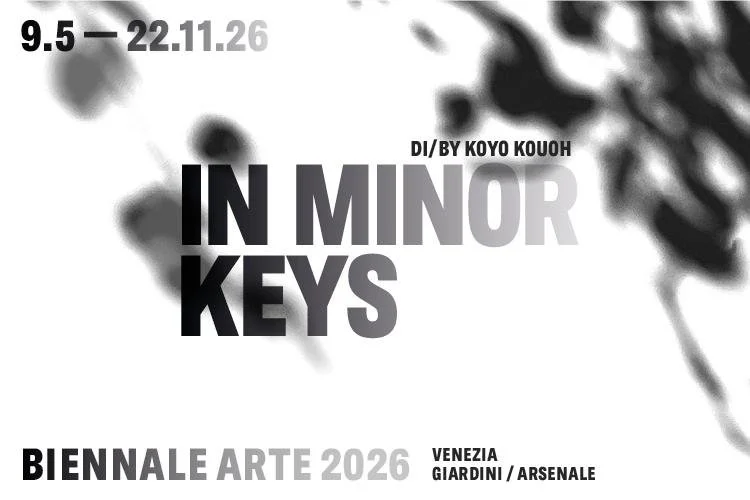
Exhibition Poster for Venice Art Biennale 2026
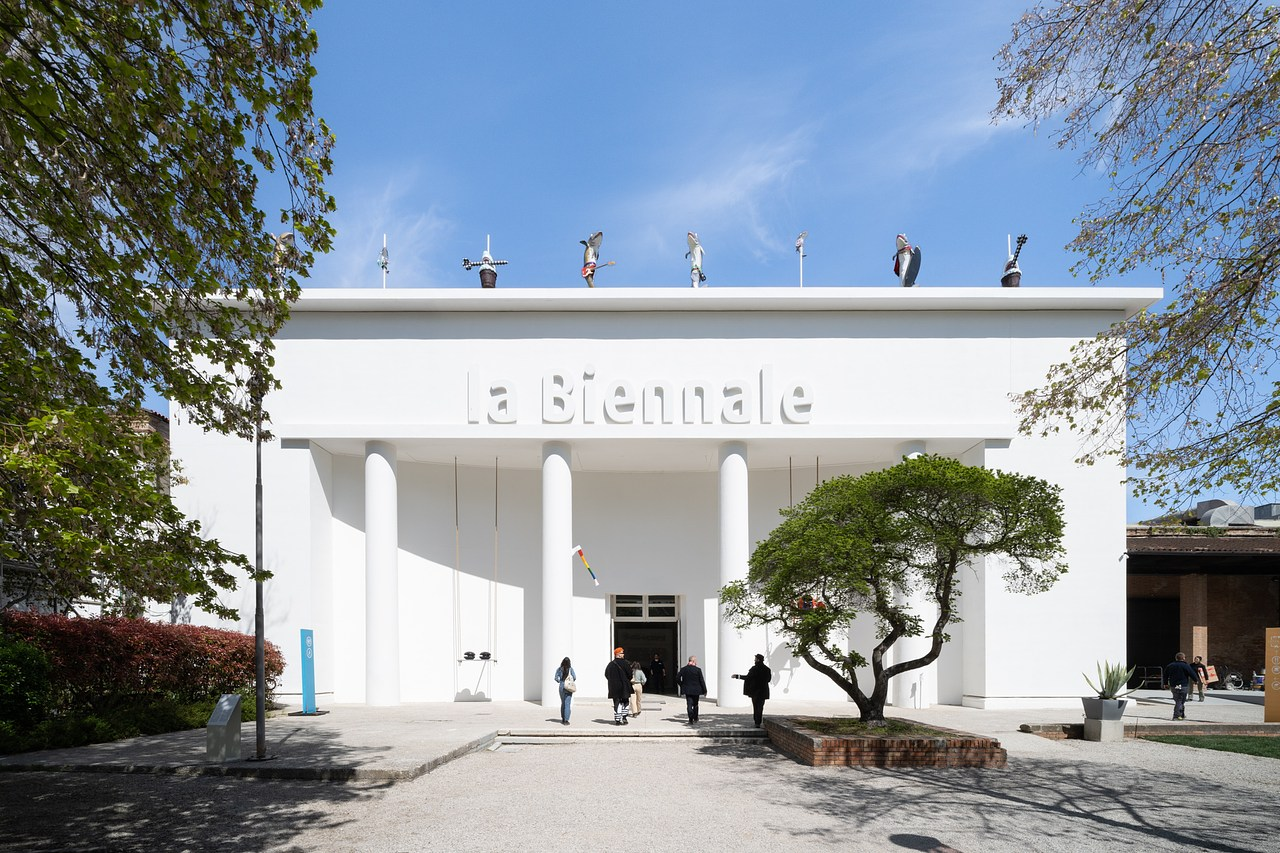
Central Pavilion, Giardini, Venice
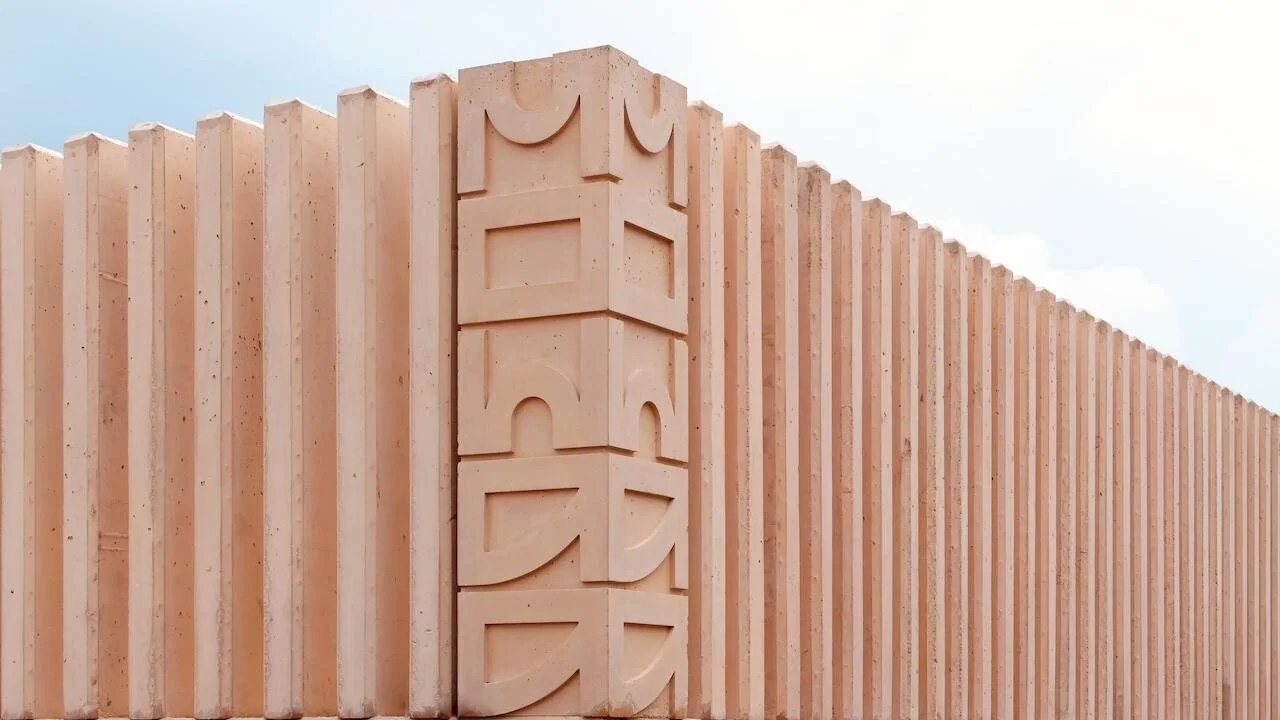
Ghana’s pavilion in 2019 is the clearest example of why that distinction matters. Ghana Freedom, curated by Nana Oforiatta Ayim and housed in David Adjaye’s earthen structure, was not simply a successful debut. It genuinely marked a new level of international attention to Ghanaian art. The pavilion brought together El Anatsui, Ibrahim Mahama, Lynette Yiadom-Boakye, John Akomfrah, Felicia Abban and Selasi Awusi Sosu across three generations of practice, and it was received as one of the standout national presentations of that year’s Biennale. Ghana became a central point in the post-2020 reorientation toward African art, and the pavilion helped to establish Accra as a serious base of artistic production and encounter. The city still bears the marks of that shift in its ecosystem, made manifest through its international relevance and the degree to which art now sits within its cultural and social life.
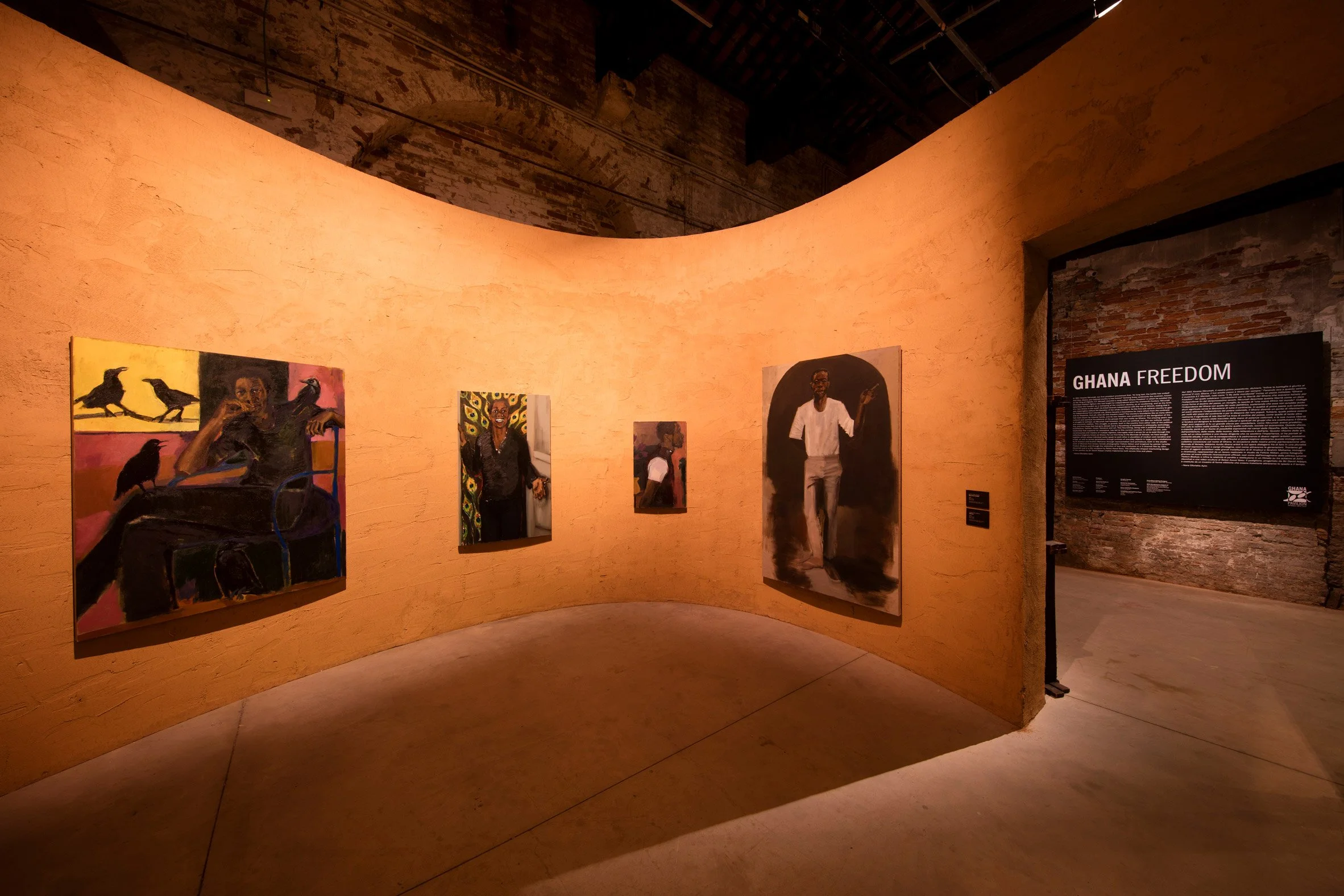
Exhibition View, Ghana Pavilion, Venice Biennale 2019
Logo, Ghana Pavilion, Venice Biennale 2019
The problem, then, is not that Ghana 2019 lacked global impact. Rather, it is that even a mobilisation of that success has not yet brought about a sufficiently organised system. The volatility around the market for black figurative painting made that plain enough, but the issue exceeds the market. What remains underdeveloped is the wider architecture that would allow moments of attention to compound into durable capacity: a collector base with depth, an academy with confidence in its own terms, institutions capable of acquisition and preservation, a critical culture that can sustain judgement, and a pedagogical structure that can transmit standards to artists. Ghana’s inability to return to Venice consistently only sharpens the point. It suggests that we are not yet even able to sustain our mobilisations, let alone build from them. This is not a criticism of the curators and organisers who made such moments possible; if anything, it is a call to recognise how much they have been forced to achieve without the system of support that should have met them halfway.
This has implications that stretch beyond the art world. Music, fashion, architecture, theatre, tourism in general all benefit when a society’s creativity becomes associated with sophisticated artistic sensibilities rather than with some old primitivist fantasy of naïve, savage artistic expression. Art does not simply generate objects for sale. It is one of the principal ways a culture becomes legible to itself and desirable to others. If one wants to make the case that African cultural production could become a serious engine of economic value, one has to begin with the fact that so much of that downstream value depends on what happens at the intersection of creativity and culture which is, at its core, the domain of fine art.
The difficulty is that the institutional form capable of doing this is not obvious. The museum still projects prestige more effectively than galleries, private markets, auction houses, individual artists or even publishing. It remains, however compromised, one of the clearest vehicles through which art becomes publicly accessible and symbolically authoritative. But in Africa the museum is not a neutral model waiting to be adopted. It is historically entangled with colonial extraction, with the seizure and classification of other people’s worlds, and with an epistemology that we have no reason simply to inherit uncritically. The latest cautionary tale of the African Museum is the Museum of West African Art (MOWAA), whose launch was mired by allegations that it did not have the backing of ethnic leadership in the Benin Kingdom. Indeed, the monarch (Oba) of Benin described the museum’s presence as an attempt to ‘re-loot’ Benin’s cultural heritage from his family. Regardless of this claim’s credibility (or lack there of), we clearly remain haunted by the spectre of our colonial past in our quest to erect new organisations. Meanwhile, even in the West, museums are politically embattled, financially constrained and increasingly unsure of their own public relevance. Knowledge itself is vulnerable to political tides; books are discarded, institutions are hollowed out, and publics become harder to hold together. So the question is not merely whether Africa needs museums. It is what an accessible, locally engaged, socially relevant and value-accretive art infrastructure would actually look like for African societies.
Architectural photography of Museum of West African art (MOWAA)
That question has to be asked directly because it is not solved by even the most beautiful singular exhibition. How does one cultivate reverence for art among publics for whom museum-going is not yet part of lived experience? How does one induce desirability for art in a fiscal climate where the straightforward construction of large museums is often unrealistic? How does one build something that is intellectually independent of colonial models, yet still capable of producing the prestige, accessibility and durability that those models have historically delivered? How does one create a system that is egalitarian without being thin, serious without being socially remote, rooted in local realities while still carrying global force?
The answer, whatever form it takes, will have to come from coordination rather than from isolated excellence. In Ghanaian terms, that means linking the work of the Ministry of Culture, Arts and Tourism as it engages questions of restitution and the political afterlife of looted objects with the Museums and Monuments Board; linking the aforementioned to the production of pedagogical materials for the school system; and linking that whole chain back outward again to institutions such as Nubuke, Dot Atelier, SCCA Tamale and blaxTARLINES, and then repeating this across the continent and diaspora to parallel structures elsewhere. If this ecosystem is to become something more than a set of parallel efforts, the people working within it need some sense of how their daily labour accumulates toward a larger whole.
That, finally, is what organisation would mean here. It would mean building an art system that is qualitatively equivalent to Western systems in seriousness and consequence, while remaining intellectually independent from them. It would mean creating an ecology that is well-funded without becoming exclusionary, rooted in local publics without becoming parochial, and globally recognised without being derivative. And it would mean doing all this not for the sake of art alone, but because there is so much economic value downstream of art still waiting to be unlocked.
